
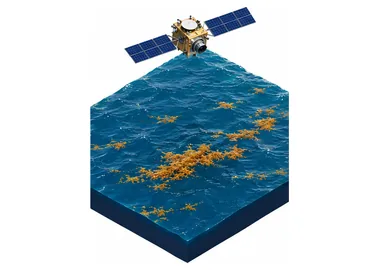
Monitoring and forecasting
Use satellite observations, drift models and field checks to plan offshore trips.
TECHNOLOGY & EQUIPMENT
The Damen RoRo 5612 provides a reference configuration for offshore Sargassum interception, pumping, onboard pre-treatment and transport.
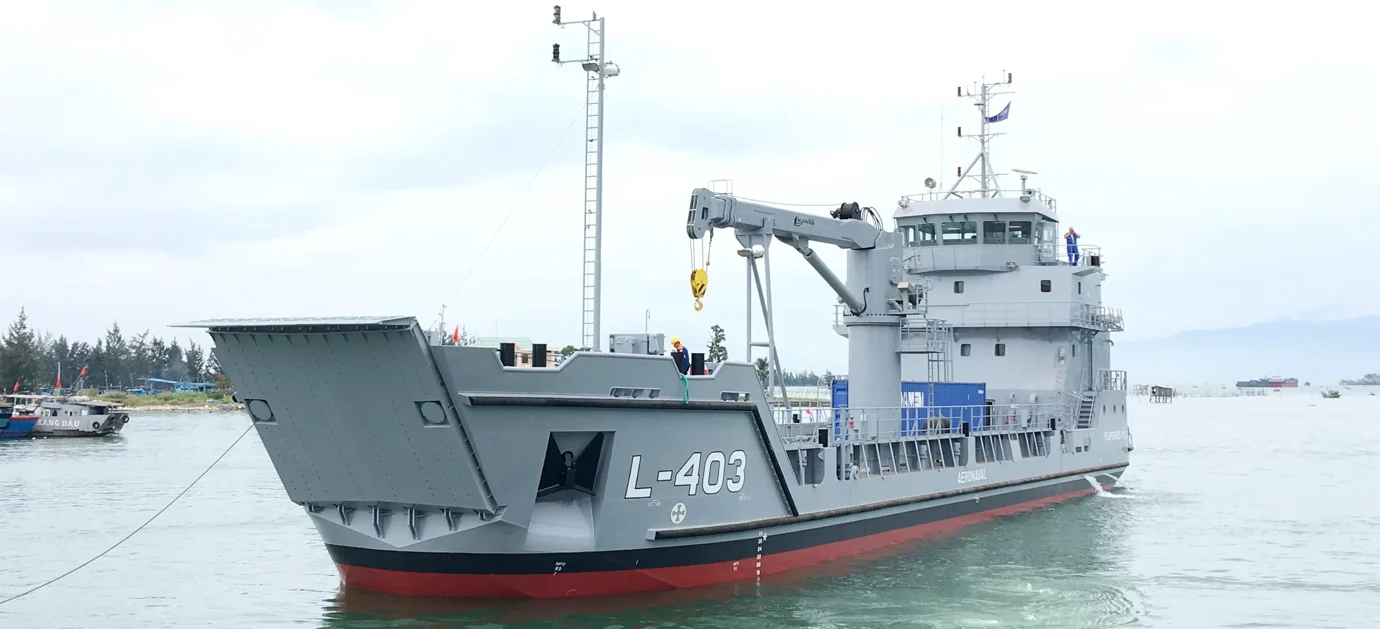
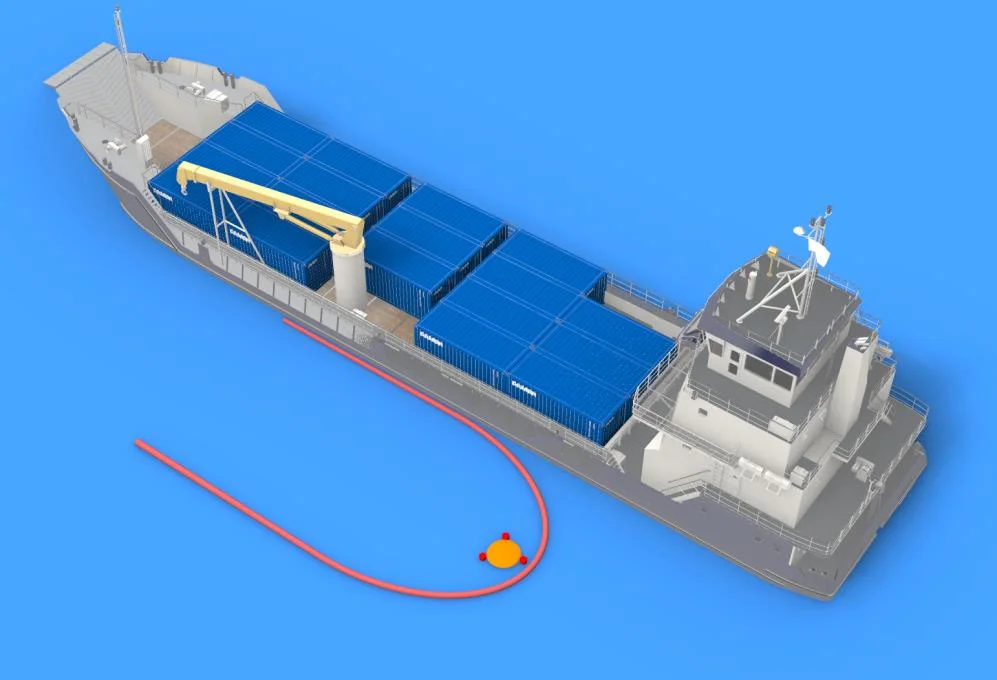
Source: Damen RoRo 5612 Sargassum Recovery technical presentation supplied for this project. Figures are approximate vessel specifications.
Use satellite observations, drift models and field checks to plan offshore trips.
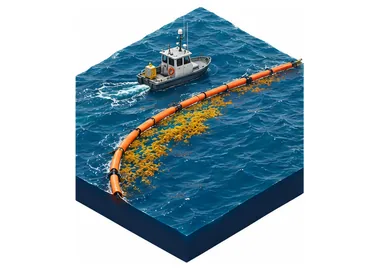
Deploy a floating U-shaped collection net alongside the vessel. The net guides Sargassum to the point where the pump can take it in.
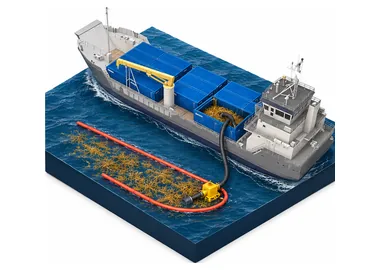
A self-priming pump powered by an onboard diesel hydraulic unit transfers the seawater and Sargassum mixture through a hose to secured deck containers. The configuration includes an emergency stop for unintended wildlife capture.
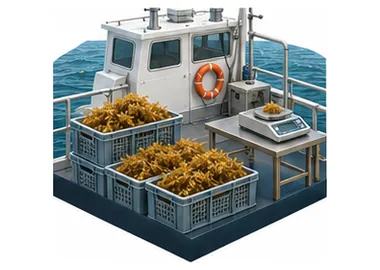
Strainer baskets retain biomass in the containers. At port, the vessel crane transfers the secured containers to the shore handling system.
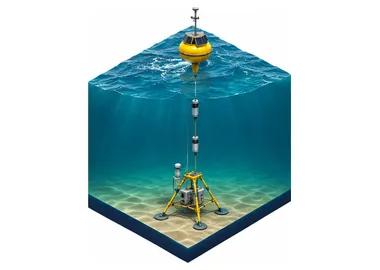
Select monitoring instruments for dissolved oxygen, nutrients, water-column observations and seabed assessment as required by the research design.
Product specifications, site conditions and the fate of the biomass determine which route can be tested. These pathways are opportunities for trials and partner development.
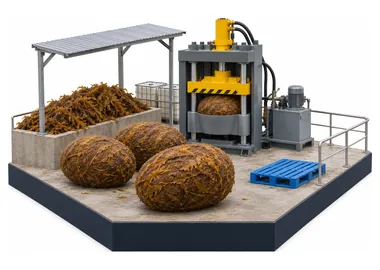
Evaluate compacting prepared biomass into large ovoid briquettes. A pilot would test moisture, bulk density, handling strength and storage behaviour before choosing equipment.
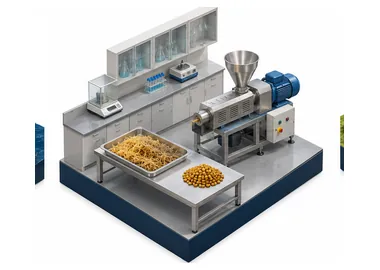
Evaluate treated biomass or extracted fractions as ingredients for biobased compounds. Industrial pelletization may prepare a controlled feedstock for downstream conversion. Test salt, moisture, contaminants and material performance for each application.
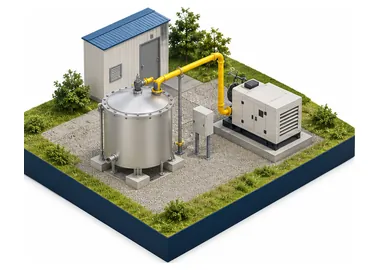
Assess options such as anaerobic co-digestion or permitted thermal conversion based on feedstock tests, process energy, emissions and the handling of digestate or ash.
Research reference. TNO comparison of biobased products and energy recovery pathways.