
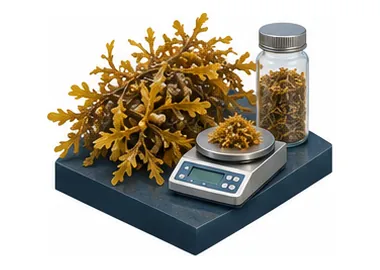
Biomass carbon
Sargassum takes up inorganic carbon during growth. Estimate biomass carbon from measured dry mass and representative carbon fractions. Wet volume alone cannot establish a carbon result.
CARBON SCIENCE
Measuring carbon in biomass starts the analysis. Net atmospheric removal depends on what would have happened anyway and on the project’s full effects.
Sargassum takes up inorganic carbon during growth. Estimate biomass carbon from measured dry mass and representative carbon fractions. Wet volume alone cannot establish a carbon result.
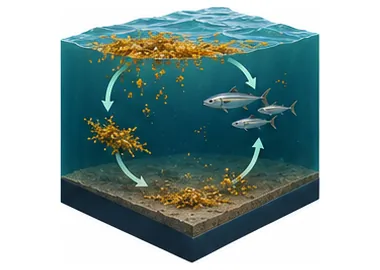
Biomass can decompose, be consumed or accumulate in sediments. Remineralization converts organic matter and can affect oxygen and nutrients.
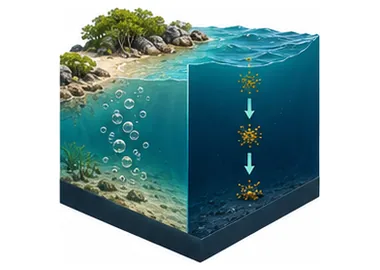
Avoided methane is a reduction against a defensible counterfactual for decomposition. Carbon dioxide removal requires a separate demonstration of net atmospheric drawdown and storage. Keep the accounts separate to prevent double counting.
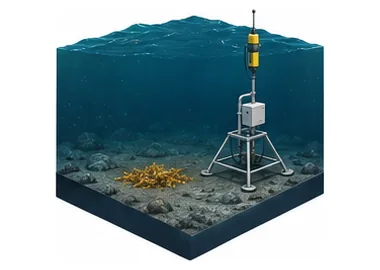
Model circulation and carbon residence times, including potential transport back toward the surface. Validate estimates against measurements where feasible.
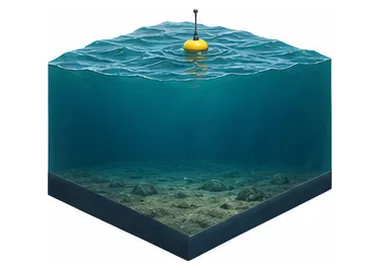
Estimate natural drift, beaching, offshore export and baseline management. Test whether the intervention produces an incremental outcome and displaces impacts beyond the project boundary.
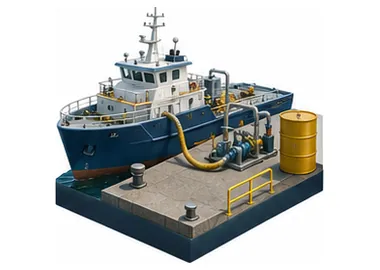
Include collection, vessel fuel, handling, monitoring and any relevant upstream or downstream emissions. Publish assumptions and uncertainty.
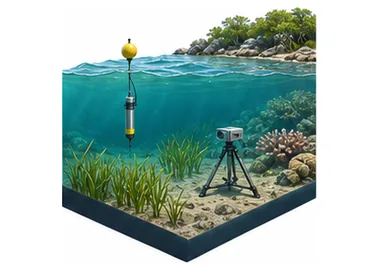
Track dissolved oxygen, nutrients and water-column and seabed impacts against baseline conditions. Establish thresholds and independent scientific review before sea trials.
Research references. National Academies research strategy · German Environment Agency risk assessment