
OUR SOLUTION
From detection to independent verification
Five stages connect offshore marine engineering with the research needed to evaluate carbon fate and impacts.
Explore the five-stage process
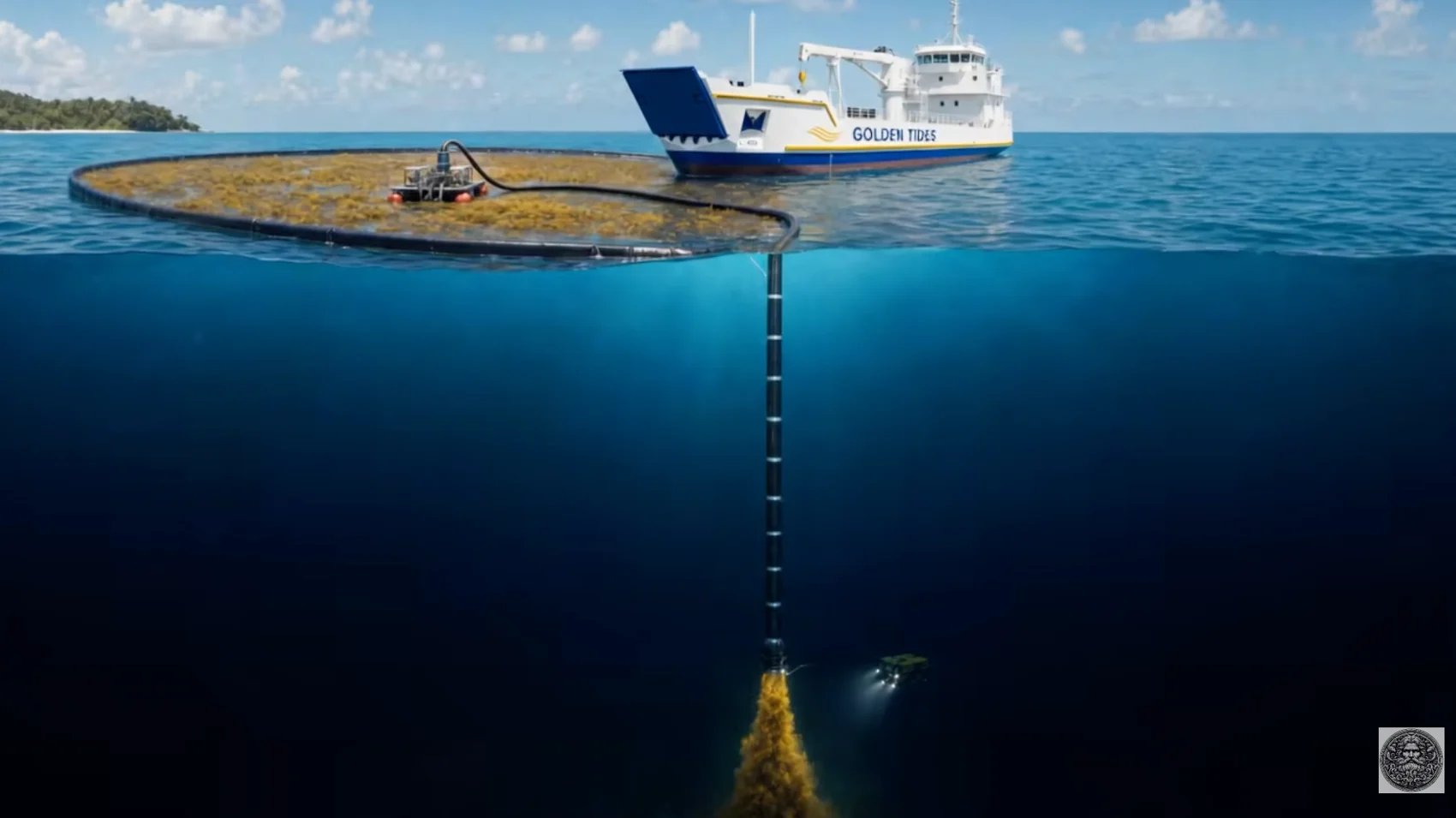 SurfaceWater columnSeabed monitoring
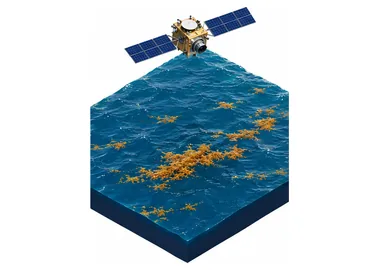 Satellite Monitoring & Forecasting
Satellite imagery and drift models help identify offshore aggregations. Field observations are used to check location and conditions. Cloud cover and resolution affect detection.
Surface detectionMonitor surface distribution and drift.
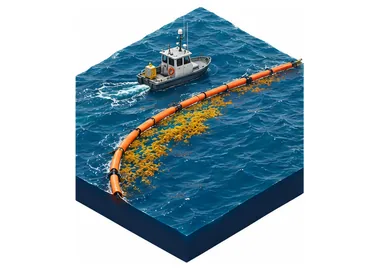 Offshore Interception
Marine teams assess conditions and marine habitats before deploying a floating U-shaped net alongside the vessel to concentrate surface Sargassum.
Surface interceptionObserve the surface and document the collection footprint.
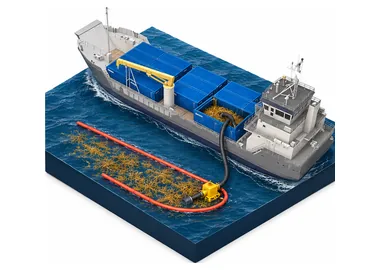 Controlled Collection
A self-priming pump at the side-net accumulation point transfers the sargassum–water mixture by hose to secured deck containers. Record where biomass is collected and how it is transferred. Measure wet mass, moisture and representative carbon content with documented sampling and custody.
Collection and measurementTrack what enters and leaves the collection system.
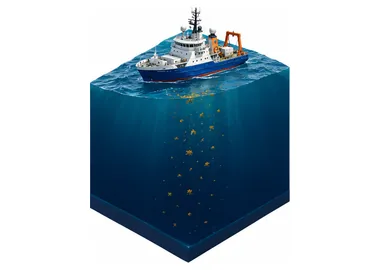 Offshore Reintegration
Study whether controlled placement could change the fate of biomass. Site selection, modeling, ecological review and applicable permissions precede any field trial.
Water-column researchStudy transport, decomposition, dissolved oxygen and nutrients.
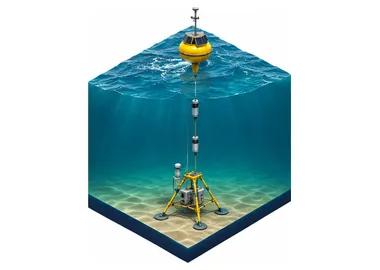 Monitoring, Reporting & Verification
Compare the monitored project with a credible baseline. Report uncertainty and impacts from the surface through the water column to the seabed.
Seabed and verificationReview seabed observations, carbon fate and environmental thresholds.
Plan a research collaboration
We welcome partners for baseline design, marine logistics, environmental observation and independent review.
Partner With Oceanus